

Britain’s Housing Scandal: Why You Can’t Afford a Home - And Who’s Getting Rich from It

Let’s stop pretending.
Britain is not “naturally expensive.”
Homes are not “just in short supply.”
Young people are not “bad at saving.”
The truth is sharper than that.
We built a system where landowners get rich, and everyone else takes on debt.
In cities like Oxford, a teacher on £35,000 faces house prices above £450,000. That is not a market balancing itself. That is a structural failure.
And here is the uncomfortable part:
The system is working exactly as it was designed to.
It rewards land scarcity.
It rewards rising prices.
It rewards those who already own.
If we want affordable homes again, for nurses, builders, graduates, families, we must fix the system at its root.
This is how.
The Real Problem Isn’t Bricks. It’s Land.
Every house price has two parts:
The cost of building it.
The cost of the land underneath it.
Construction costs are significant — but they are not what turns a £200,000 home into a £600,000 one.
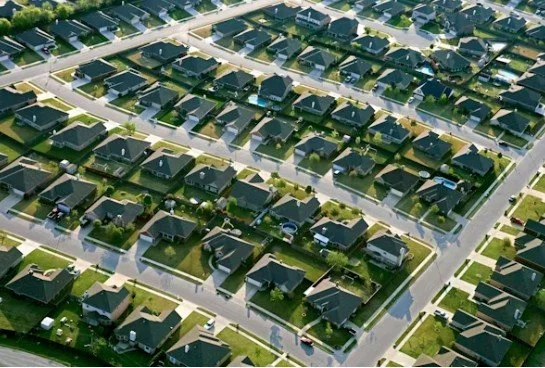
Land does that.
When agricultural land worth £10,000 per acre receives residential planning permission, it can jump to £1 million or more per acre.
Did the landowner build a school?
Did they lay the roads?
Did they create the nearby jobs?
No.
The value was created by society, by public infrastructure, economic growth, and planning decisions.

Yet the gain is largely private.
That is the imbalance driving the housing crisis.
Land Value Tax: The Quiet Revolution
A Land Value Tax (LVT) is simple.
It taxes the value of the land itself — not the building.
Improve your home? No penalty.
Install insulation? No penalty.
Build higher density housing? No penalty.
But if you sit on an empty plot in a city centre — you pay.
How It Would Work in Practice
Gradually replace Council Tax and Stamp Duty over 10–15 years.
Use modern valuation systems (already used internationally).
Allow low-income or elderly households to defer payment until sale.
Keep rates stable and predictable.
What Changes
Land banking becomes expensive.
Empty city-centre sites come forward.
Surface car parks become housing.
Speculation reduces.
Over time, land prices stabilise.
When land prices stabilise, house prices follow.
It shifts taxation from work and productivity onto passive land wealth.
That is economically efficient — and fair.
Unlock Underused Commercial Land (The Fastest Win)
Walk through almost any British town.
You will see:
Retail parks
Big-box supermarkets
Vast surface car parks
Single-storey trade warehouses
Business parks with enormous footprints
Most of this land is one-storey, low-density space inside existing urban areas.

Instead of arguing over countryside, rezone this land automatically for:
4–6 storey mixed-use housing
Ground-floor shops
Courtyard blocks
“Missing middle” density
No towers.
No endless sprawl.
Human scale.
Infrastructure already exists.
Schools, roads, utilities are nearby.
This is urban repair — and it is politically achievable.
Build Properly. Build Beautifully.
The Renaissance architect Leon Battista Alberti insisted buildings require:
Firmitas — strength
Utilitas — usefulness
Venustas — beauty
Modern housing too often forgets the third — and sometimes the first.
New homes should:
Last 100 years
Meet net-zero standards
Sit within walkable neighbourhoods
Use durable materials
Include trees, courtyards, public squares
Beauty is not luxury.
It creates stability, pride, and long-term value.
Transport First, Sprawl Last
Housing only works if mobility works.
In Oxford, that means:
Reinstating the Cowley branch rail line
Rapid bus corridors
Dutch-style cycling infrastructure
Reducing car dependency

If commuting drops from 60 minutes to 20, effective housing supply rises.
Transport is housing policy.
Council Housing 2.0
Post-war Britain built at scale.
We can again.
We need:
Regional modular housing factories
Standardised design codes
Net-zero council housing
Community land trusts that lock in permanent affordability
Half of new homes should be affordable rental or cooperative housing.
Housing must once again be treated as infrastructure — not a speculative chip in a casino.
Food Policy Is Land Policy
Here is the part rarely discussed.
Large areas of Britain are used for livestock, particularly sheep and cattle.
A gradual shift toward:
More vegetables
More plant protein
Less land-intensive meat
would free land for rewilding, forestry, and strategic development.

Modern methods already exist:
Hydroponics
Agriponics
Vertical farming
AI-driven precision agriculture
Electric weed-zapping robots reducing chemical use
Reducing food waste further eases land pressure.
Land is a finite resource. We must use it intelligently.
Decentralise the Economy
London’s gravity pulls jobs — and housing demand — into one region.
Move:
Civil service departments
Regulatory agencies
Public institutions
to Midlands and Northern cities.
Strengthen regional knowledge clusters.
You cannot fix housing without fixing economic geography.
The Political Reality
The crisis persists because:
Rising prices benefit existing owners
Pension wealth is tied to property
Councils lack incentives to approve development
Planning is slow and adversarial
To change this:
Provide direct infrastructure funding per new home.
Capture land value uplift transparently.
Establish a long-term National Housing Commissioner.
Encourage community co-ownership to align incentives.
When local communities share the upside, resistance softens.
Why This Matters for Your Money
At Money Tipps, we talk about:
Investing
Financial freedom
Long-term wealth
Smart asset allocation
But if half your income goes on housing, wealth building becomes survival.
Affordable homes mean:
Higher savings
Greater pension contributions
More entrepreneurship
Stronger families
A more productive economy
Lower housing costs are the most powerful economic reform available.
The Simple Target
Over 20 years:
Reduce house-price-to-income ratios to 3–4x.
Achieve net-zero operational carbon.
Build 4–6 storey human-scale communities.
Reform land taxation.
Treat housing as infrastructure.
This is not extreme.
It is rational.
Britain’s housing crisis is not a law of nature.
It is the result of policy.
And policy can change.
